
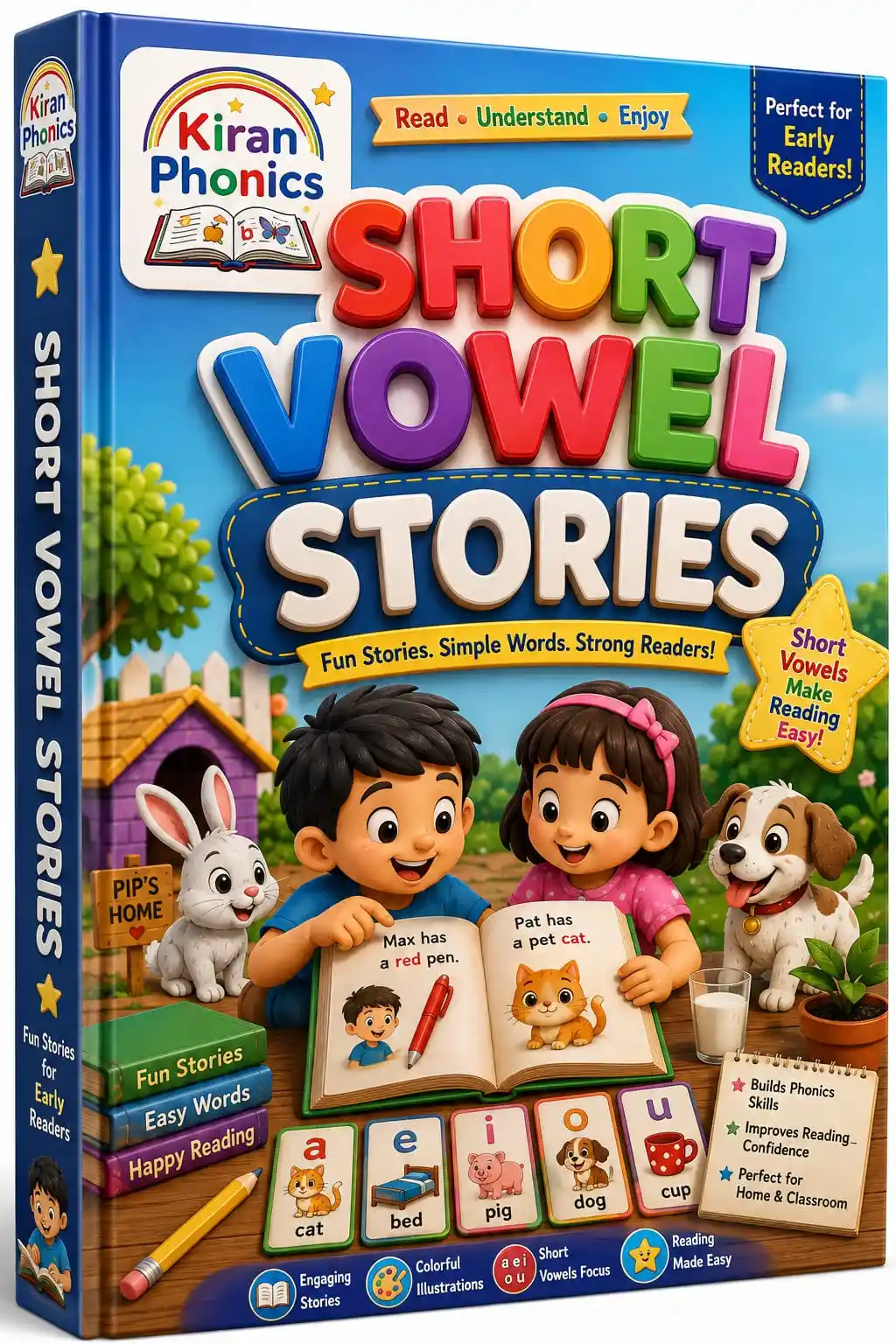
Short Vowel Stories 📚
Short Vowel Stories are a fun and effective way to help young learners develop early reading skills through simple, phonics-based stories. Instead of practicing isolated sounds and word lists, children can see short vowel patterns used in meaningful sentences and engaging stories. This makes reading practice more enjoyable while helping children connect sounds with letters.
Why Short Vowels Matter
Short vowels are an important foundation for beginning readers. The five common short vowel sounds are found in words such as cat, bed, pig, hot, and sun. Learning these sounds helps children decode many simple consonant-vowel-consonant (CVC) words.
The Short Vowel Stories approach gives children repeated exposure to these sounds in context. When children encounter the same vowel pattern several times, they can begin to recognize familiar words more quickly and develop stronger decoding skills.
Learn Through Simple Stories
Young readers often enjoy stories more than traditional word drills. A short story can introduce simple vocabulary while giving children a reason to keep reading. For example, a story about a cat, a red hen, or a big dog can naturally include many words with the target vowel sound.
Teachers and parents can choose one short vowel at a time. Start with words containing short a, then move to short e, i, o, and u. After children become comfortable with each sound, combine different vowel patterns to provide additional reading practice.
The Short Vowel Stories method can also support sight-word development. Simple high-frequency words such as the, is, can, and, see, and has can be included alongside phonics words. This helps children become more comfortable reading complete sentences.
Build Reading Fluency and Confidence
Phonics is not only about sounding out words. Children also need repeated reading practice to develop fluency. Reading the same short passage more than once can help improve accuracy, speed, expression, and confidence.
After reading a story, ask simple comprehension questions. Children can identify characters, describe what happened, find specific words, or answer basic who, what, where, and why questions. These activities connect phonics practice with reading comprehension.
The Short Vowel Stories approach can be useful at home, in preschool, kindergarten, and early elementary classrooms. Teachers can use the stories for guided reading, independent practice, small-group instruction, or phonics review.
Make Phonics Practice Enjoyable
Children learn best when reading activities are clear, short, and engaging. Use colorful illustrations, repeated reading, word-building activities, and simple questions to make practice interactive. Celebrate progress and encourage children to try unfamiliar words instead of being afraid of mistakes.
For parents and teachers looking for engaging phonics material, Short Vowel Stories can be a valuable addition to an early reading program. With regular practice, children can strengthen their short vowel recognition, improve decoding skills, and gradually become more confident independent readers.